Urban environment · Cyprus
Cyprus for people.
We look at how to make Cypriot towns easier to live in — from pavements and parking to transport, trees and public space. We find cities that have already done it, and show what the same thing could look like here.
Studies
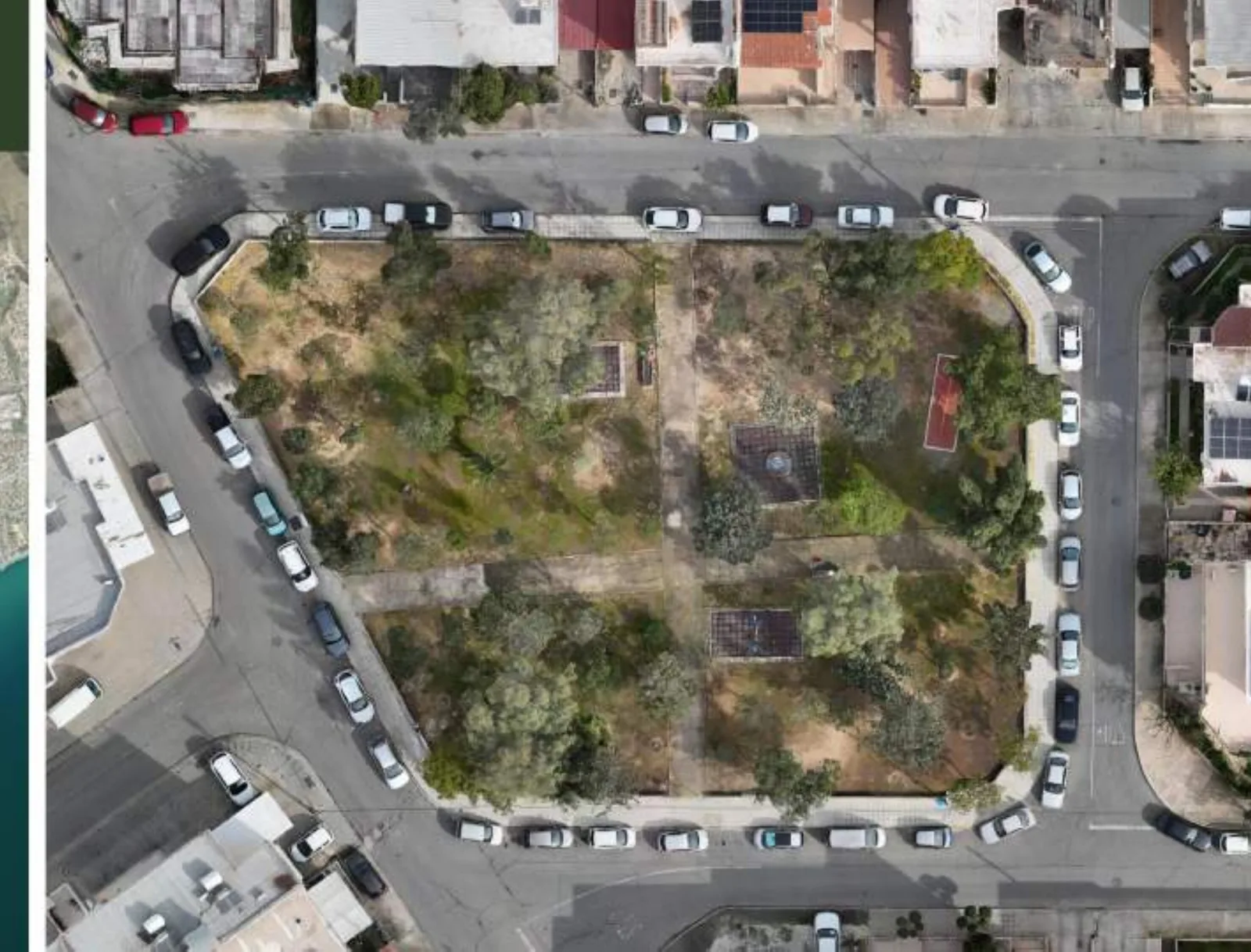
A review of Limassol's preliminary design for fifteen public spaces
What the preliminary design for 15 sites in 13 Limassol neighbourhoods actually contains: a play area of four or five catalogue items, no new shade structure anywhere, and beyond the plot line no approaches, no pavements, no crossings.
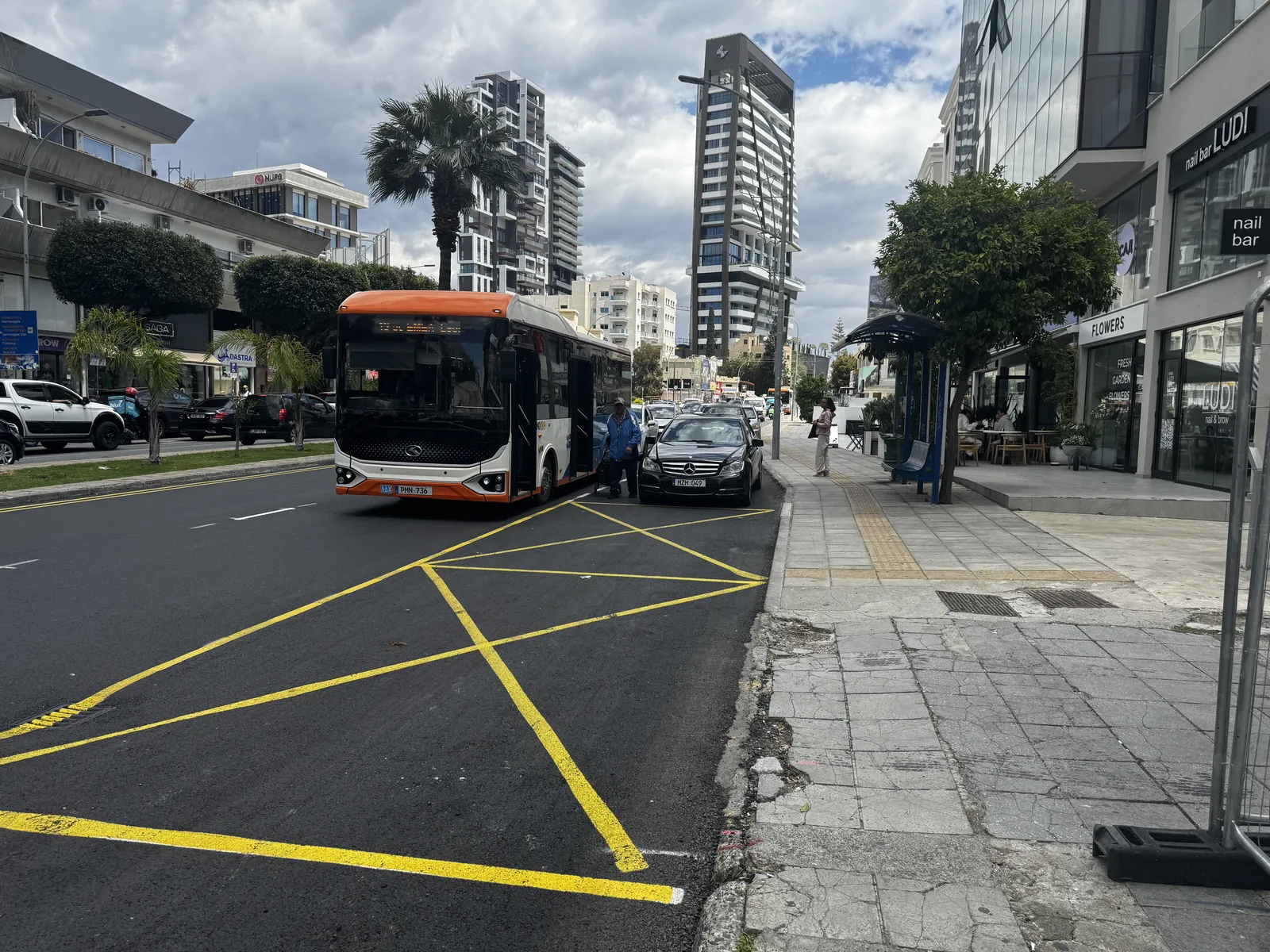
The bay the bus never pulls into
Why the bus bays on Limassol's coastal road get in the way instead of helping: what the London and US design guidance says, why the bus physically cannot reach the kerb, and three plan drawings of how it is fixed.
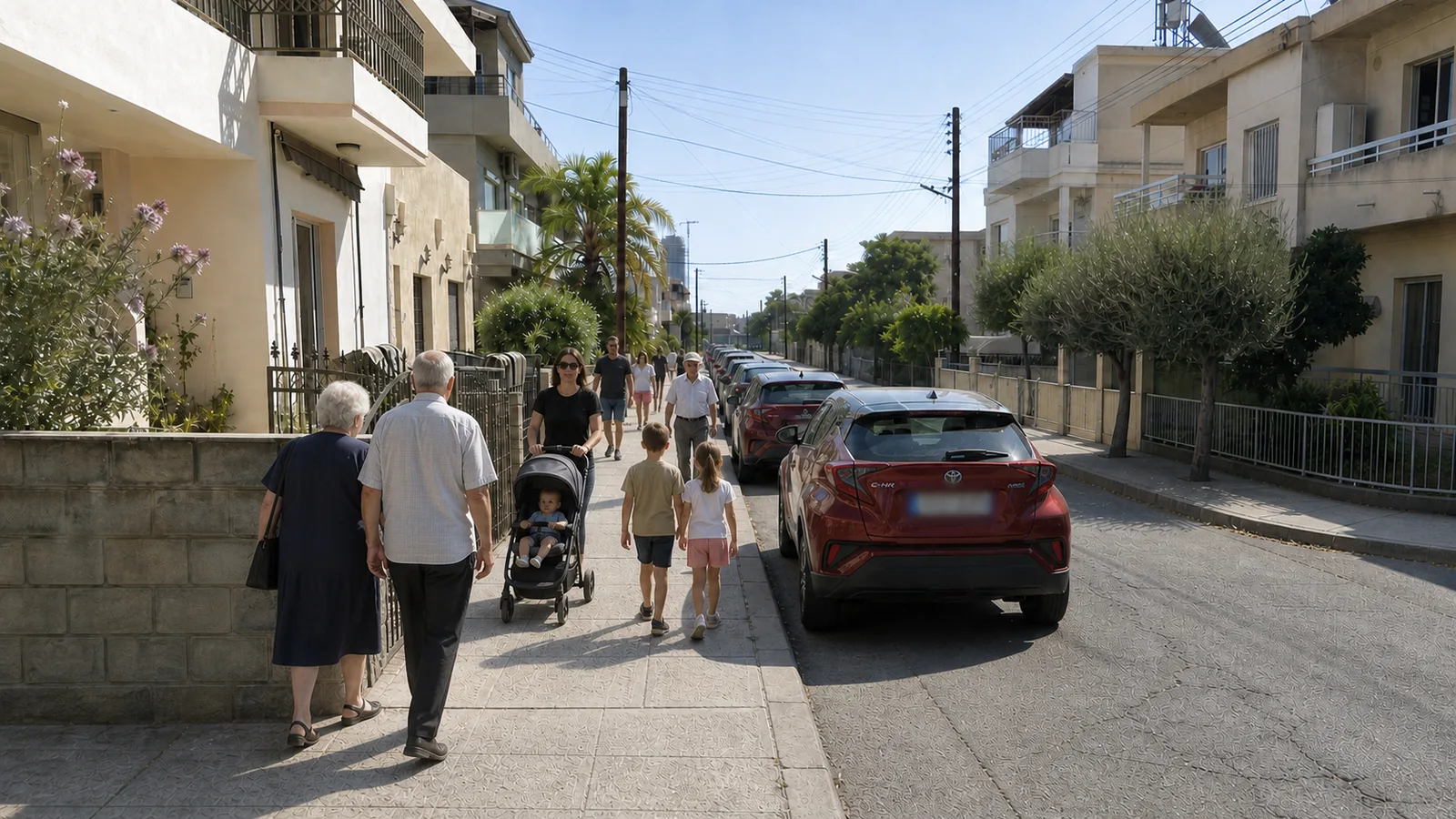
The street you cannot see for the cars
A short study: why Cypriot residential streets have no usable pavement even though the space for one is already there. One panorama with the parked cars removed, and three visualisations of what fits into exactly the same width.
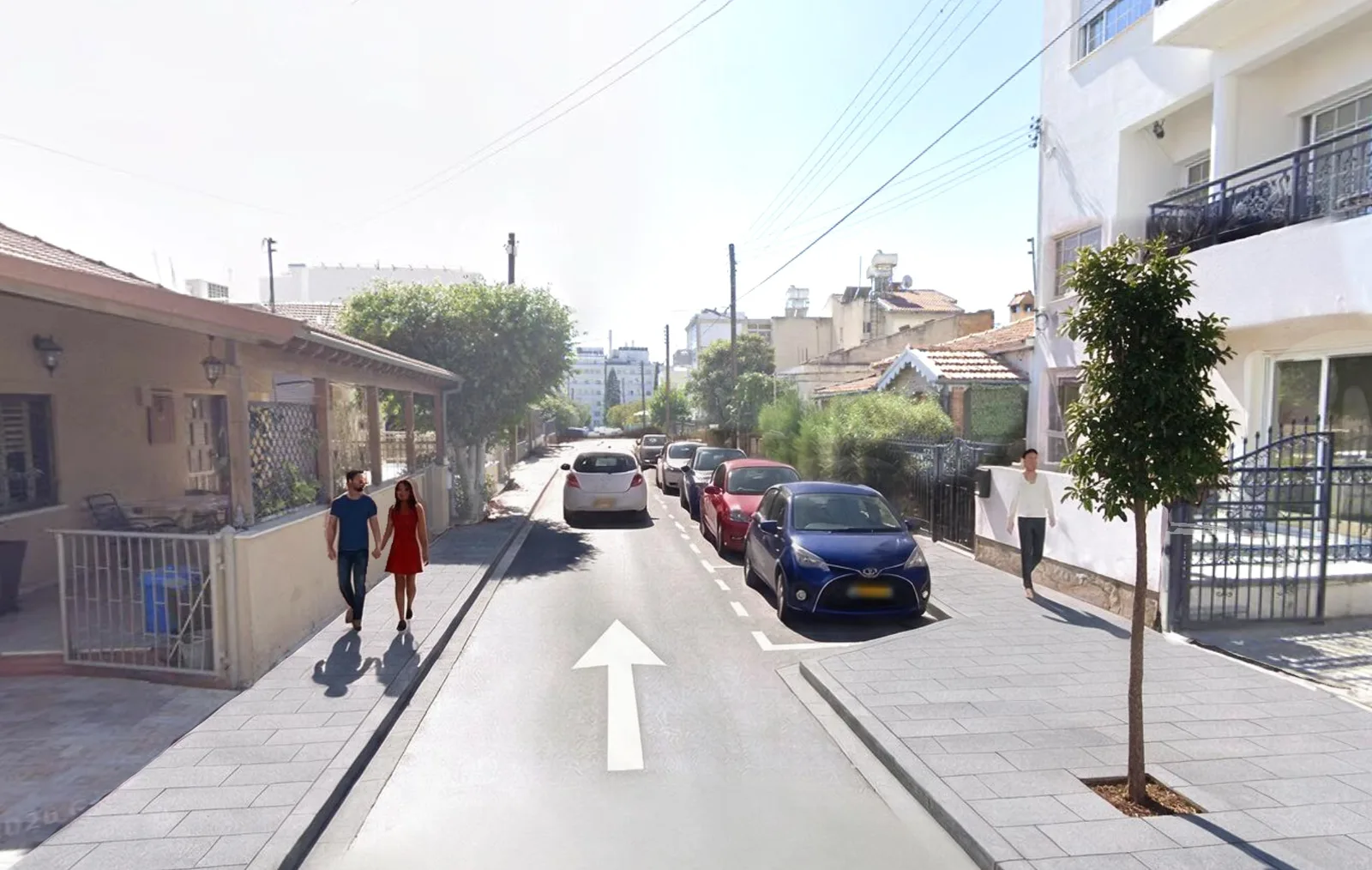
The neighbourhood where pedestrians walk in the road
A study of northern Agios Ioannis in Limassol (3016): why 60 cm pavements are not about bad drivers but about geometry, and how one-way streets give people back a metre and a half.